
If you’re not a UAE national or resident, you might assume owning property in Dubai is out of reach. It isn’t. Since 2002, the Dubai government has allowed full foreign ownership — freehold — in designated areas across the city, and the process is more straightforward than most people expect.
Here’s exactly how it works, step by step.
1. Confirm the area is freehold
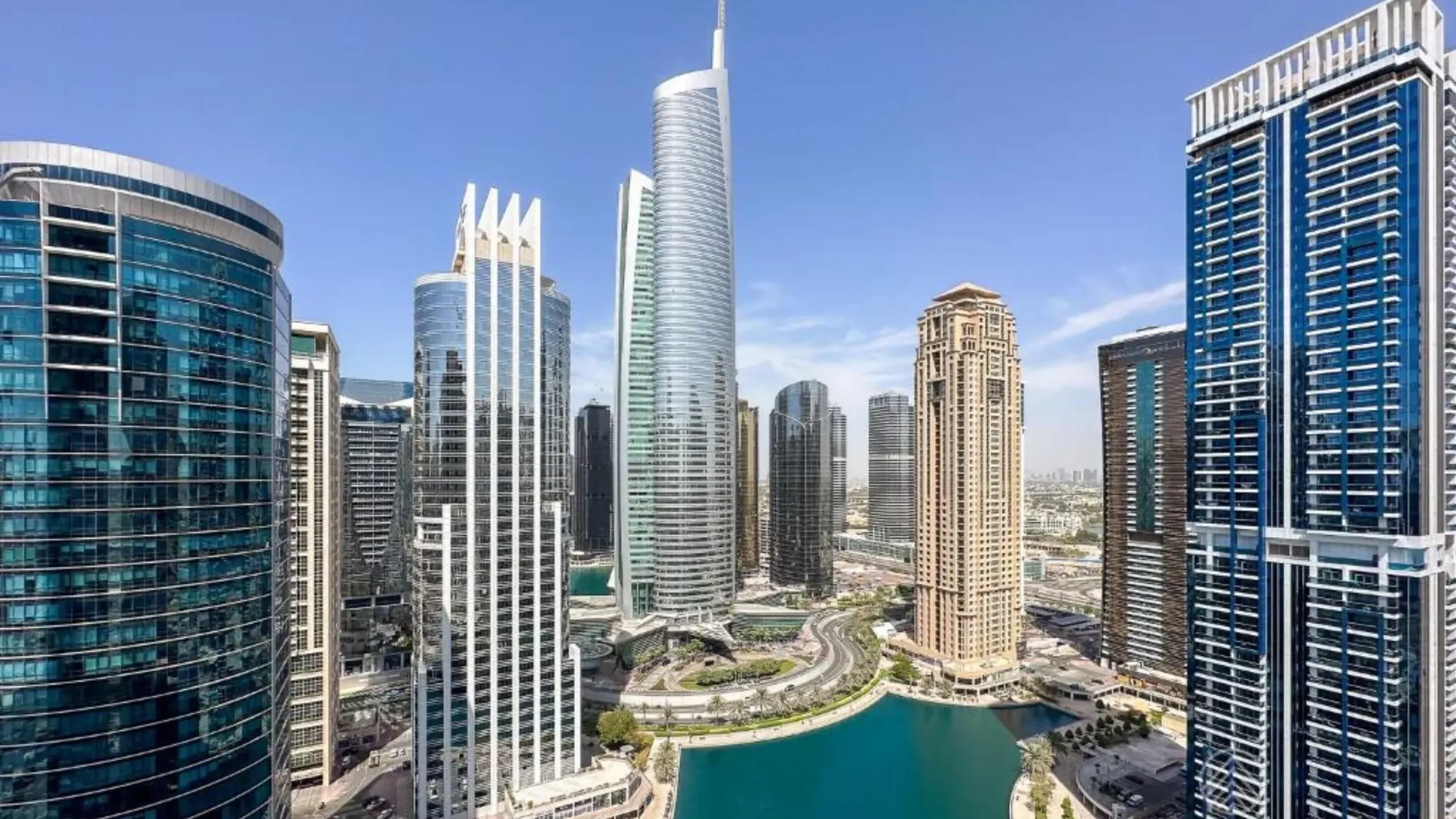
Not every neighbourhood in Dubai allows 100% foreign ownership. Freehold areas include popular investor zones like Jumeirah Lake Towers (JLT), Dubai Marina, Downtown Dubai, Business Bay, Al Furjan, and Dubailand — but plenty of older, more central neighbourhoods are still leasehold-only for non-GCC nationals. Before you fall in love with a listing, confirm its freehold status. This is the first thing we check for every client.
2. Get your paperwork ready
You don’t need a UAE visa or residency to buy. What you do need is:
- A valid passport
- Proof of funds or a mortgage pre-approval if you’re financing
- A UAE bank account is helpful but not mandatory for the purchase itself
Non-residents can get a mortgage in Dubai too, though down-payment requirements are generally higher and vary by bank, property type and buyer profile.
3. Make an offer and sign the MOU
Once you’ve chosen a unit, your agent submits an offer to the seller. If accepted, both parties sign a Memorandum of Understanding (MOU) — in Dubai this is the standard Form F contract regulated by the Dubai Land Department (DLD). At this stage, the buyer pays a deposit, usually 10% of the purchase price, held with the agency or a trustee.
4. Apply for the No Objection Certificate (NOC)
The seller’s developer issues an NOC confirming there are no outstanding service charges or liabilities on the unit. This normally takes a few business days and both parties (or their agents) attend in person or via power of attorney.
5. Transfer ownership at the DLD
With the NOC in hand, buyer and seller meet at a DLD registration trustee office to complete the transfer. The buyer pays the remaining balance (usually via manager’s cheque). The Dubai Land Department (DLD) transfer fee is 4% of the purchase price — by default it’s generally split between buyer and seller, though in practice the buyer may agree to pay the full 4% depending on the transaction. Always confirm who is paying what before you sign.
6. Receive your title deed
Once the transfer is registered, the DLD issues the title deed in your name — the same legal ownership document a UAE national would receive. From this point, the property is fully yours: you can live in it, rent it out, sell it, or put it toward a UAE Golden Visa application — property investors can qualify for the 10-year Golden Visa once their investment meets the AED 2 million threshold.
What this actually costs, all in
Beyond the purchase price, budget for:
- DLD transfer fee: 4% of the purchase price
- DLD registration and administrative fees: these vary depending on the property and transaction type
- Agency commission: typically 2% of the purchase price
- NOC fee: AED 500–5,000, set by the developer
- Mortgage registration fee (if financing): 0.25% of the loan amount
None of this requires you to be physically based in Dubai — with a power of attorney, the entire process can be completed remotely.
The short version
Foreign ownership in Dubai is real, regulated, and well-trodden — thousands of international buyers complete this process every year. The steps that trip people up are usually about which area is freehold and what the all-in costs really are, not the ownership itself.
If you’re weighing a specific building or community, send us the listing — we’ll tell you plainly whether it’s freehold, what the total cost to close would look like, and whether it fits what you’re actually trying to do with the property.